Behind the Curtain: Vulnerabilities Exposed
2025 Award & Grant Recipients
The 2025 CENTER Award recipients photographic exhibition presents documentary and conceptual projects by Chloé.A, Greg Constantine, Mitsu Maeda, Debmalya Ray Choudhuri, Sarah Sudhoff, and Alex Welsh. Their works address stories of vulnerability and living under threat including gun violence, immigration detention, environmental degradation, and familial loss.
The exhibition will be celebrated with a public reception on Friday, October 31, 2025, 4:00 – 6:00 PM MT. The weekend continues with the PORTFOLIO WALK on Saturday, November 1, 2025, 6:30 – 8:30 PM MT at the Farmers’ Market Pavilion in the Santa Fe Railyard, where attendees can meet the photographers and experience their projects firsthand.
EXHIBITION DATES (EXTENDED) • October 31, 2025 – January 9, 2026
GALLERY HOURS • Tuesday – Friday, 11 AM – 5 PM
Please note that CENTER will be closed for the holidays December 24, 2025 – January 2, 2026, and reopening on Tuesday, January 6, 2026.
PUBLIC RECEPTION • Friday, October 31, 4:00 – 6:00 PM MT
WHERE • 1570 Pacheco St, B-1, Santa Fe, NM
HOW • Free and Public
ACCOMMODATIONS • Schedule your class visit or sensory-friendly visit to the new CENTER space by emailing programs@centersantafe.org.
We look forward to seeing you!
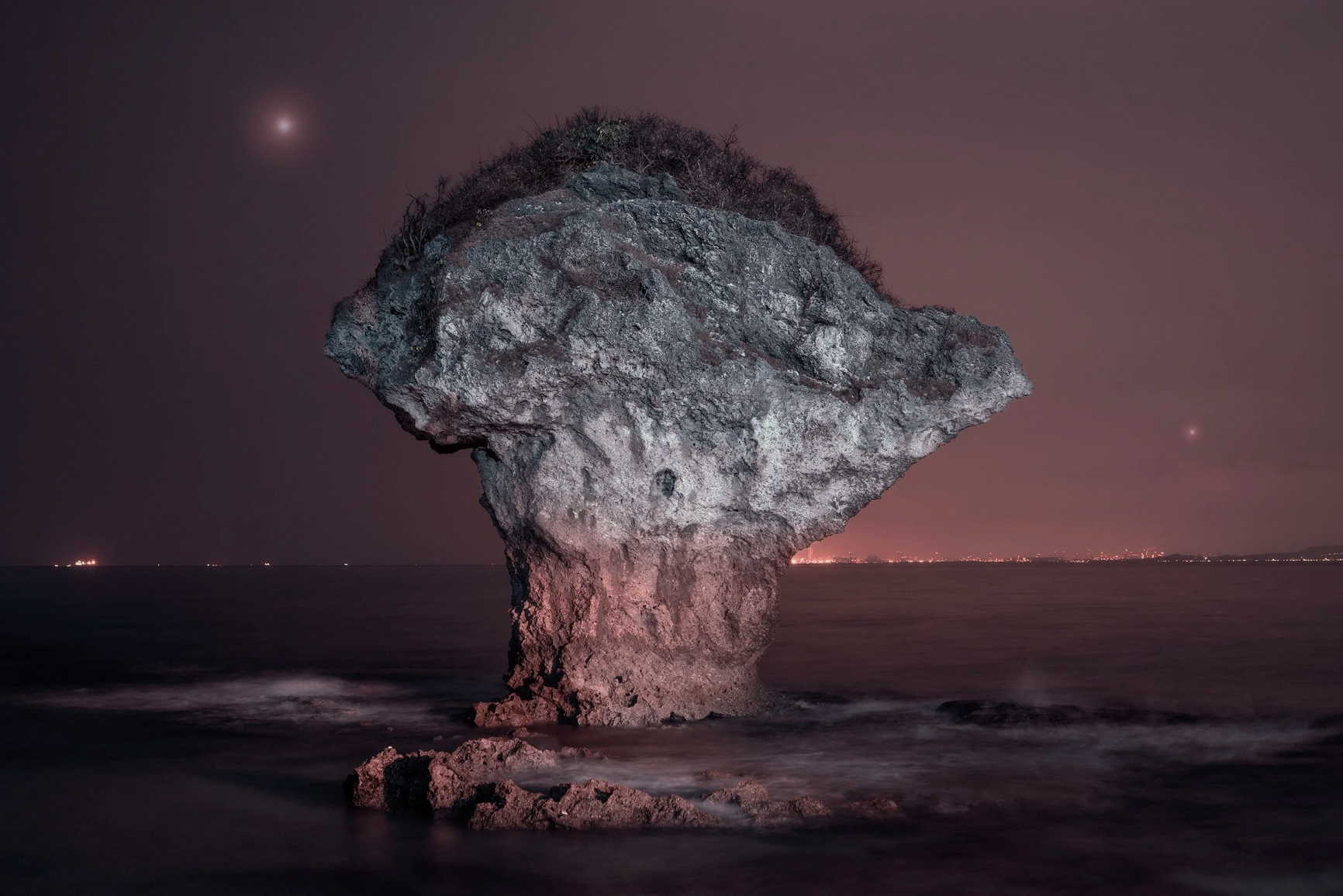
© Chloé.A
-
Sarah Sudhoff • 2025 Project Launch Grant Winner • sarahsudhoff.com
77 Minutes in Their Shoes includes long-term, community involvement with the victims' families and survivors devastated by the 2022 shooting in Uvalde, Texas at Robb Elementary, which took the lives of 19 students and 2 teachers. Since 2022, I have been fostering a relationship with the nonprofit Lives Robbed, formed by the families, to witness and understand the full impact of these massacres and the role of art in helping communities process grief, establish connection, and enact change.77 Minutes in Their Shoes, serves as an extension of my socially engaged practice which surveys our exposure to gun violence in the USA through photography and installation. Thirteen of the twenty-one families chose to participate in the project. 77 Minutes in Their Shoes features twelve color photographs of the shoes the Uvalde children were wearing at the time of their deaths. A teacher's running weight vest, which closely resembles a bulletproof vest, was also included. The shoes and vest were photographed as a straightforward document and as evidence of this tragic event. The still-life photographs are paired with black and white photographs of the family holding the shoes and vest. These intimate portraits reveal the families' vulnerability, resiliency, anger, and hope for a better outcome through their participation in this project.
The Uvalde families titled the project 77 Minutes in Their Shoes, which references the horrors their children and the teachers endured at Robb Elementary. However, for me as an artist and mother of two young children, the project also encompasses the seventy-seven minutes each person within their community waited for news of loved ones. This event did not just impact the 21 lost lives but forever changed all those still living.
For a recent installation of 77 Minutes in Their Shoes, I chose to print the shoes and vest to scale and frame them in simple floating pine boxes. The children and teachers are never coming home. This is a fixed reality. The family portraits were also printed nearly life-size on sheer fabric resembling vertical banners. Audiences subtly moved the portraits as they navigated around the families before reaching a small room housing the photographs of the shoes and vest. Audiences were confronted again with these images as they exited the space. The threshold from safe to unsafe and citizen to survivor is growing smaller every day. These banner portraits serve as the ongoing faces of gun violence in America.
-
Debmalya Ray Choudhuri • 2025 Personal Award Winner • rayd.space
A Factless Autobiography is inspired by a chapter of the same name in the Book of Disquiet by the Portuguese poet Fernando Pessoa. It is an intimate and personal exploration of loss, desire, and the fragile nature of our existence. I started this project in response to the death of a lover and my confrontation with tuberculosis as a young adult. It grapples with the complex and often conflicting emotions of grief, melancholia, and survival while also questioning the nature of gender, identity, and the human condition. This work is a fragmented narrative of lived experience, longing, and healing.
A Factless Autobiography marks the first chapter of an ongoing trilogy that I have been working on for seven years, spanning my time in the U.S., This series primarily focuses on the journeys of three protagonists: a trans woman from Côte d'Ivoire, an immigrant in America and recovering addict whom I met in my early years in the U.S.; a Black gay American man, a survivor of abuse, and myself. Our personal and collective histories and struggles offer a window into the often-overlooked complexities of identity in a fractured society. Through this work, I try to explore the challenges of being a queer South Asian immigrant in the socially and politically fragmented landscape of America, where queer and trans lives are increasingly at risk while also attempting to raise awareness of the power of solidarity and community.
Central to my process is cultivating meaningful connections with those I meet. Through sustained conversations and the development of friendships with strangers—many of whom are survivors of trauma—I aim to create a healing space in which they can express their pain and their hopes for transformation. By invoking a sense of anonymity and ambiguity, I honor the subject’s presence as both a collaborator and a performer in the work, allowing for a layered narrative. Through these intimate and intense encounters, I seek to expand the often-neglected conversations surrounding taboo issues, such as mental health, suicide, trauma related to trans and queer experiences, and human feelings of desire and longing.
Through a collaborative choreography, in which dreams sometimes color reality, I ultimately raise the question of self-affirmation.
-
Alex Welsh • 2025 Environmental Award Winner • alexwelsh.com
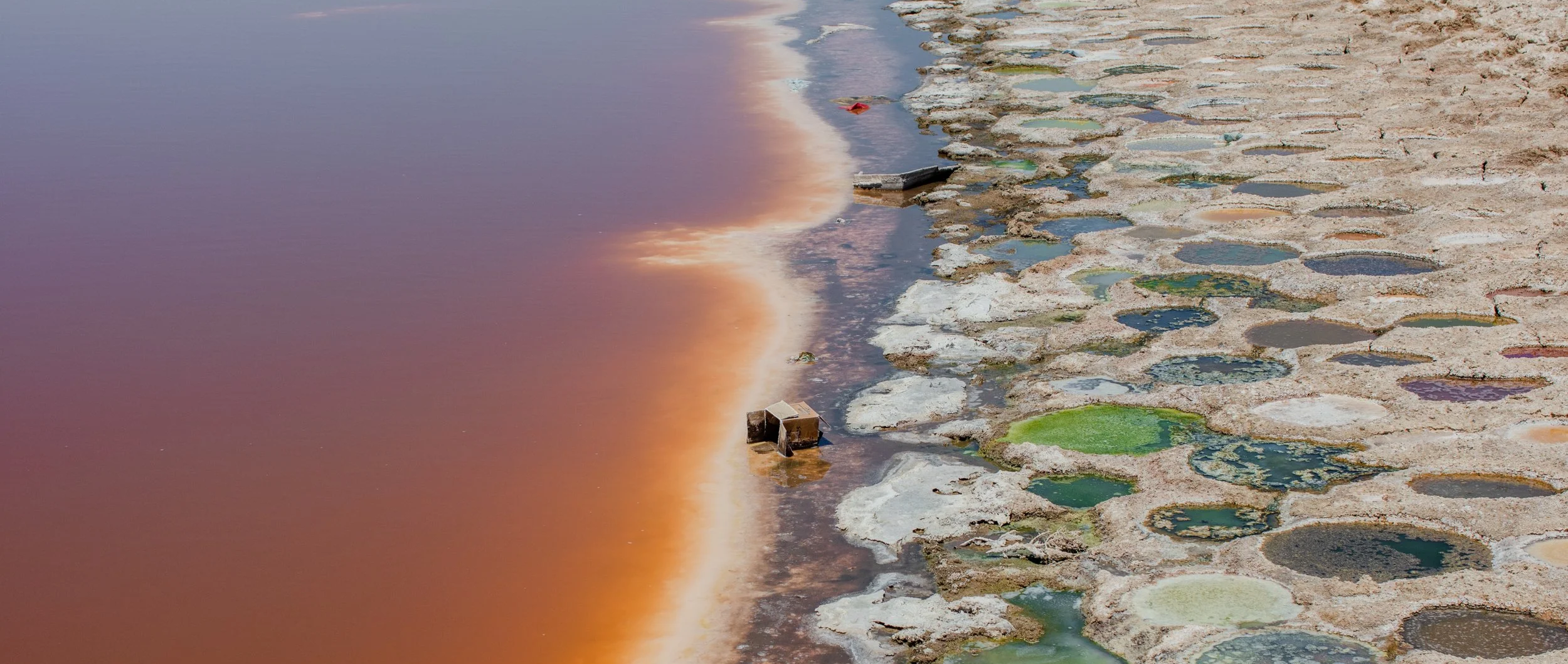
As drought fueled by climate change batters the American West, evaporation and a decreased inflow of agricultural runoff from surrounding farms are causing California’s Salton Sea to shrink. Today, the state’s largest and most polluted lake teeters on the brink of ecological collapse. Residents living in its vicinity face the threat of toxic dust. As the soil dries and the winds stir, the lake’s parched shores emit hazardous dust laced with arsenic, selenium and pesticides—remnants of a century's worth of agricultural runoff. Respiratory illness in the area is already widespread, and in Imperial County, children visit emergency rooms for asthma-related symptoms at double the average statewide rate. The lake’s future now stands at a precipice: protracted drought and reductions in inflow from the overextended Colorado River threaten to accelerate the beleaguered lake’s decline. If the shoreline continues to recede, an estimated 100 tons of lung-damaging dust could blow off its shores daily by 2045.
The circumstances at the Salton Sea represent a microcosm of an alarming global phenomenon: Earth’s largest lakes are drying out. According to a 2023 study published in the journal Science, over half of the planet’s large lakes have diminished in size over the last three decades, and approximately one-quarter of the population worldwide currently resides in the basin of one of these shrinking water bodies. Terminal lakes—landlocked bodies of water that have no drainage like the Salton Sea—are particularly vulnerable to climatic and agronomic stressors. A combination of evaporation and water diversion has caused Lake Chad in Central Africa to shrink by 90%, leaving behind a desert region that is currently one of the largest sources of dust on the planet. Lake Urmia in northwest Iran has diminished to 10% of its former size, and both the Aral Sea in Central Asia and Lake Poopó in Bolivia have completely disappeared.
Expansive and productive farmland surrounds the Salton Sea. Home to a large population of Latinx and Indigenous Mexican agricultural workers, the region is one of the most environmentally burdened and economically disadvantaged in California. My project is a photographic examination of the interrelated environmental and public health crisis unfolding as a result of the shrinking lake, a phenomenon reflective of a larger global reality where pollution, ecological degradation, and climate change compound existing social inequities and force marginalized communities to bear the disproportionate brunt of their negative impacts.
-
Greg Constantine • 2025 Multimedia Award Winner • 7doors.org
Today, immigration detention is a central component of immigration and asylum policy for governments around the world. In the United States, over 46,000 immigrants are detained each day in a web of prison-like detention centers while they wait for their asylum claims to be heard. Media coverage and policy discussion of immigration is often defined by the politicized optics of border crossings. Moreover, the visual translation of the use of immigration detention, especially in the United States, is usually reduced down to info graphics or illustrated maps. But how much does the US public really know about the scale and scope of this system and the trauma it inflicts on people?
I spent seven years on the project Seven Doors (2015-2023) and traveled to nine countries. The United States is the centerpiece of this entire project. Through images, data/statistics, voices and oral testimony and video, this project interrogates the widespread use of immigration detention in the United States in an attempt to demystify and expose: where these places are located, what they look like and how they traumatize and damage the lives of individuals, families and entire communities.
The work from the US titled, An American Gulag presents a multi-layered ‘photographic atlas’ of the US detention system. Panoramic images of the facilities along the western, southern and eastern border and square images of county jails throughout the interior of the US are paired with oral testimony of individuals sharing their experience in these facilities. The voices of those who have been detained or families who have someone in detention serve as the viewers guide into this experience. In an exhibition format, over 25 of these photographs are paired with QR code prompted ‘audio testimonies’. It is an immersive way of transporting audiences closer into the lived experience of what life is like inside these places of injustice. Documentary work and short videos are used to further ground the work and also share personal stories and the efforts being made to combat this system. In parallel with the visual work, data and statistics are used throughout to add more context.
The use of detention reached historic levels during Trump’s first term, and the Biden Administration failed to significantly reduce immigration detention. However, the Trump administration’s second term is already showing America’s immigration detention complex will expand exponentially over the next four years. I intend to continue this work.
-
Mitsu Maeda • 2025 Me&Eve Award Winner • mitsumaeda.com
Memories of my grandmother, Tsuyajyo, kindly stay with me all the time; A small purse in which Tsuyajyo collected 500 yen coins to give me and my sister when we visited her. Hide-and-seek in a morning after I stayed a night at their house.
My grandfather became sick and started staying in the hospital when I was a student. On one of his last days, I visited him and found him tied to the bed in a sterilization room after he had tried to remove a tube attached to his throat. He was still trying to move and staring at us, even though he could no longer make a sound. “He is not the grandpa you know; maybe you shouldn’t see him anymore.” Tsuyajyo told me.
Tsuyajyo began showing symptoms of dementia around 2009. It was the first time my mother experienced having a family member with dementia. She took care of her mother, who could hardly perform basic tasks like eating or taking a bath. Tsuyajyo would often get angry irrationally and became someone my mother no longer recognized as her mother. These days lasted for about two years.
In 2012, Tsuyajyo moved to a care home where she would stay for the next seven years. I started photographing this series around that time as well. While my mother passed her responsibilities to the caregivers, she would visit her mother every few days to spend half an hour there, as if it were her duty, saying, “I just wish for her to laugh once a day.” Tsuyajyo gradually became calmer, and singing her original lines became her favorite activity. I was often amazed by her laughter. I was surprised when she gripped my hand more strongly than I expected, saying, “I want to grip your hand tightly until my blood vessels burst!”
I took pictures and made notes of her unique lines so that I could remember these small moments.
In 2018, Tsuyajyo moved to the hospital where her husband spent his last days. She started receiving intravenous fluids, as she could no longer eat. She also stopped singing. She could hardly move and was there until her organs slowly stopped working on a night in January 2020, at the age of 100. My mother, father, and I were there with her. I started to feel her absence, but we all smiled, seeing her face.
-
Chloé.A • 2025 Project Development Grant Winner • instagram.com/qloait
This documentary project explores coming-of-age for Taiwanese grappling with their dreams, the construction of their identity, and geopolitical events.
I visited my cousins in the aftermath of the earthquake of 2 April, 2024. In the space of a month, the island had experienced more than 1,000 aftershocks. This unusual instability of the earth echoed the diplomatic blurring of internationals relations.
This long-term project highlights the nuances and complexities of the Taiwanese situation. It follows people of different regions into adulthood including my cousin who will soon be serving in the military. I am interested in how the current political situation influences their sensibilities and the construction of identities.
This program is made possible by a grant from the New Mexico Humanities Council, the National Endowment for the Humanities, and the City of Santa Fe Arts & Culture Department.